The short answer
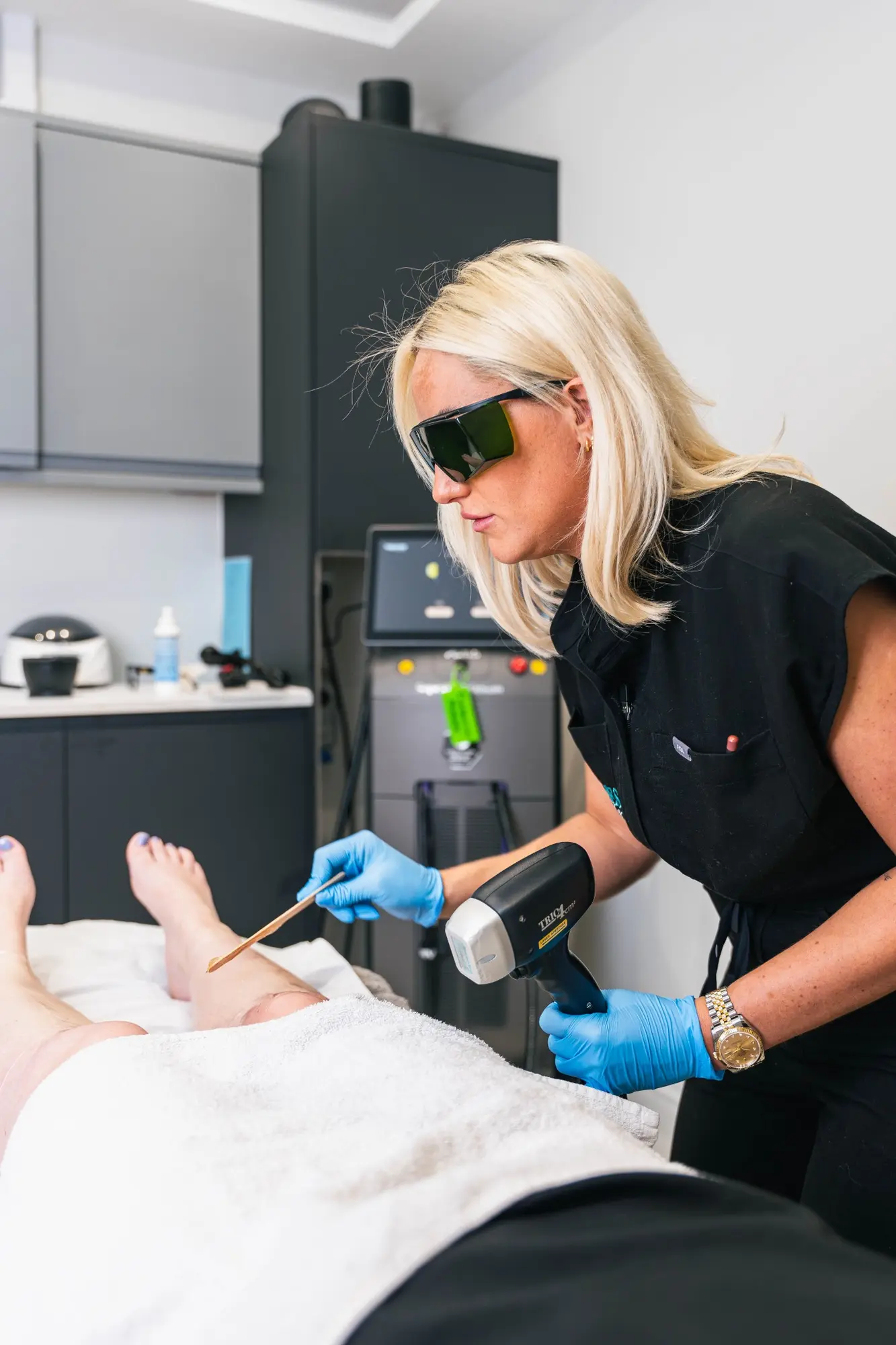
Soprano Titanium is a professional laser hair-reduction platform made by Alma. Instead of relying on one laser wavelength, it combines 755 nm, 810 nm and 1064 nm energy in the same applicator. It also uses Alma's SHR In-Motion approach, which builds heat gradually through repeated passes, while ICE Plus technology continuously cools the skin.
How laser hair reduction works
Laser hair reduction depends on pigment. Light energy is absorbed by melanin in the hair and converted into heat, which damages structures in the follicle involved in producing new hair. The aim is long-term hair reduction rather than a promise that every single hair will disappear forever.
That distinction matters. Results vary with hair colour and thickness, treatment area, skin tone, hormones and how consistently a course is completed. Hair with little or no pigment – particularly white, grey and very blonde hair – generally responds poorly because there is less melanin for the laser to target.
Three wavelengths in one applicator
Each wavelength has different absorption and penetration characteristics.
More superficial
Relatively strong melanin absorption for more superficial targets.
Balanced
A balance of melanin absorption and penetration.
Deeper
Deeper penetration with lower epidermal melanin absorption.
Why three wavelengths?
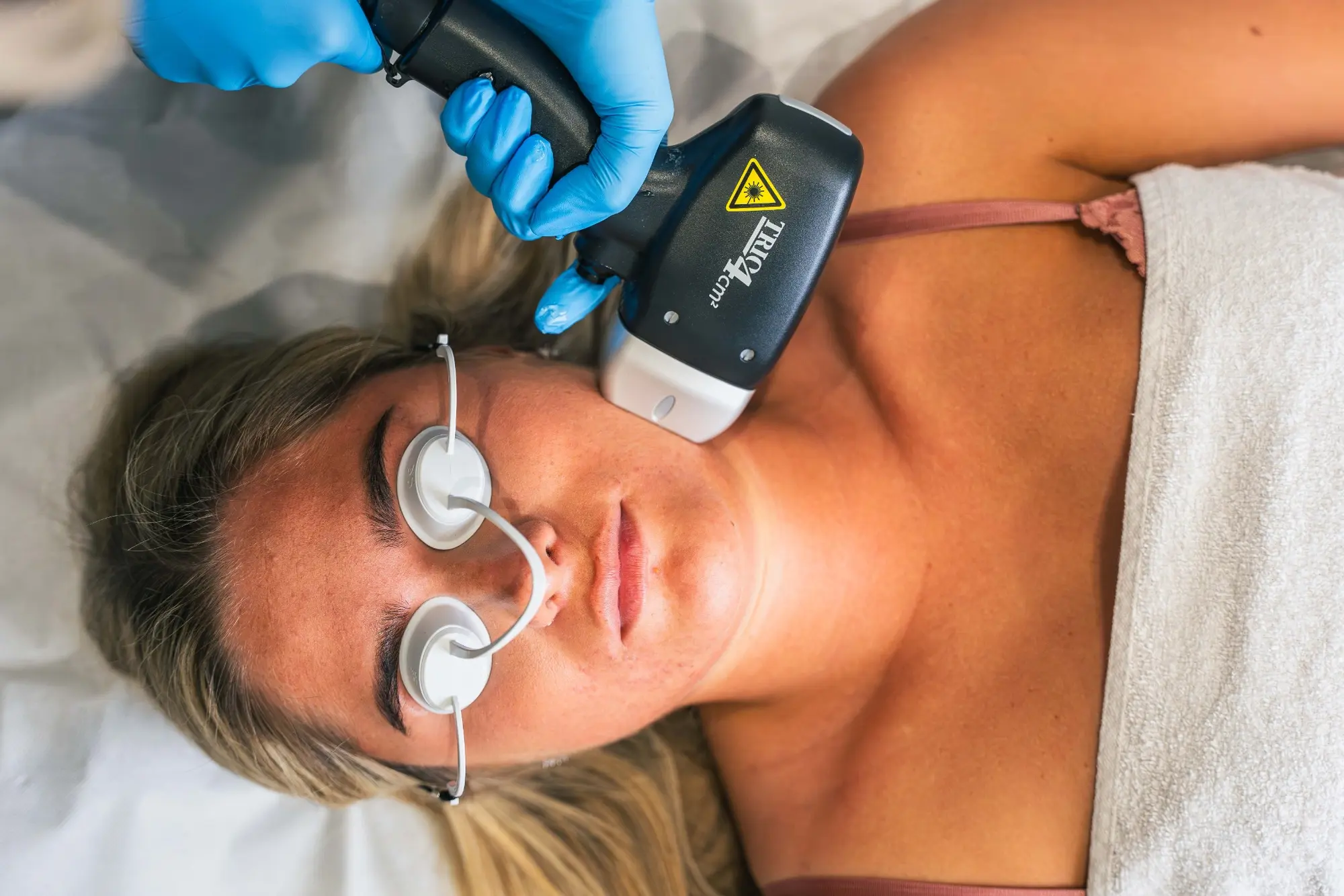
The three wavelengths have different optical characteristics. The 755 nm wavelength has relatively strong melanin absorption and is useful for more superficial targets; 810 nm offers a balance of melanin absorption and penetration; and 1064 nm penetrates more deeply with lower absorption by epidermal melanin, which is one reason it is valuable when treating deeper follicles and darker skin tones.
Soprano Titanium emits these wavelengths together. The practical idea is not that every hair needs three separate lasers, but that one applicator can deliver energy across a broader range of follicle depths and client profiles. Clinical studies of simultaneous 755/810/1064 nm systems have reported meaningful hair reduction across a range of skin types.
What does SHR In-Motion change?
Traditional laser treatment is often imagined as individual high-energy 'zaps'. SHR In-Motion takes a different approach: the handpiece moves repeatedly across the treatment area and delivers energy at a high repetition rate, gradually heating the target while coverage builds up. Published research comparing lower-fluence multiple-pass diode treatment with a high-fluence single-pass approach found the multiple-pass technique produced less discomfort while maintaining hair-reduction efficacy in that study.
Is it suitable for everyone?
Soprano Titanium has evidence supporting use across Fitzpatrick skin types I-VI, including darker skin tones. That does not mean every person or every hair colour is an ideal candidate. Very light, white, grey or red hair may contain too little target pigment, and medical history, medication, recent tanning and skin condition can affect whether treatment should go ahead.
That is why a consultation and patch test are more useful than choosing laser from an online claim alone.