There is no honest one-number answer
If a clinic promises that everybody needs exactly the same number of laser sessions, be cautious. A course has to account for the treatment area, hair colour and thickness, skin tone, hormones, previous hair-removal habits and how your hair responds as treatment progresses.
Why one session cannot catch every hair
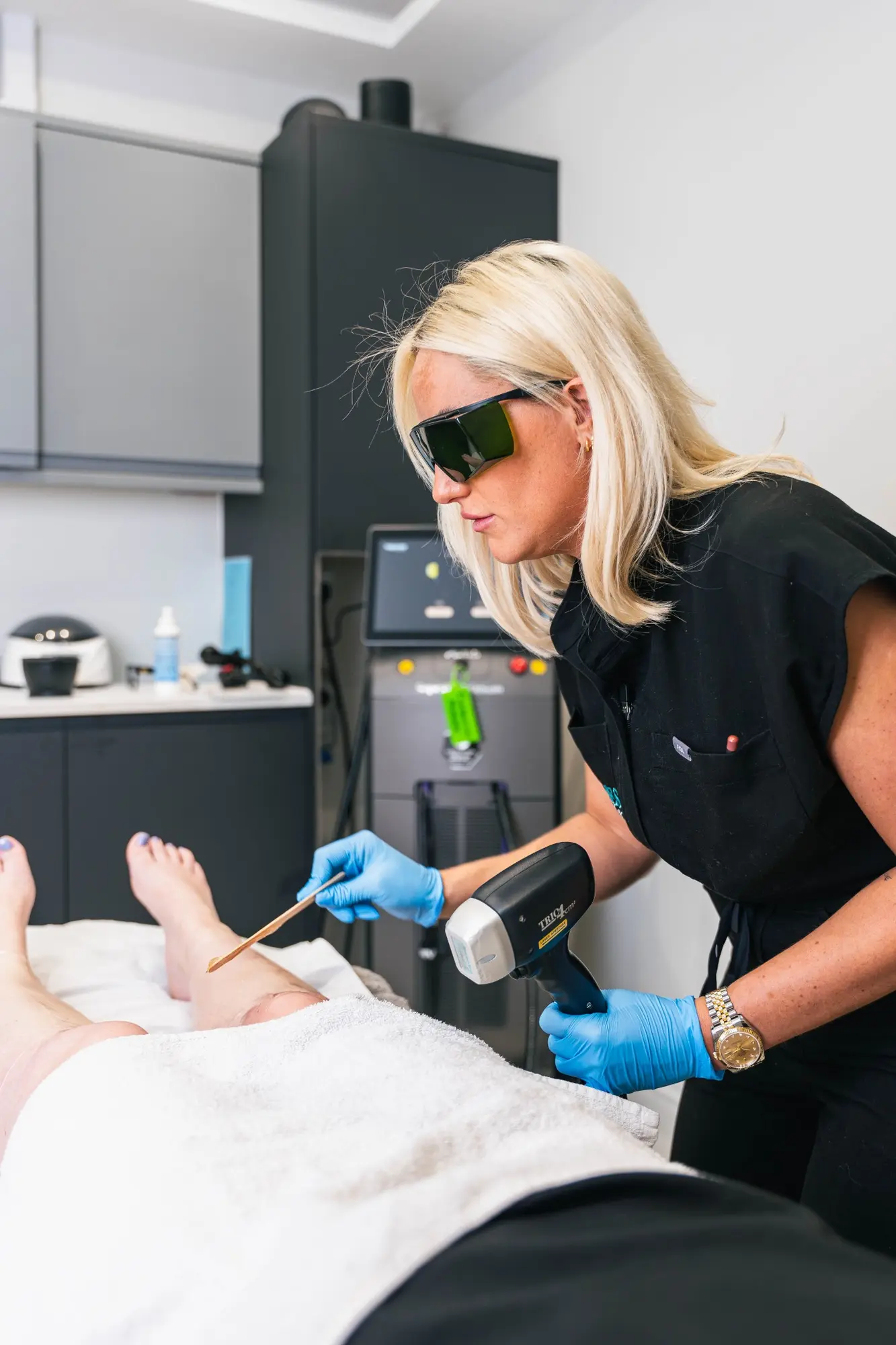
Laser is most effective when a hair is in its active growth stage. Hairs in the same area are not all in that stage at the same time, which is why repeated appointments are necessary. Each visit gives the laser another opportunity to target follicles that have entered a more responsive part of the cycle.
Why a course is needed
Laser is most effective when a hair is in the active growth phase, and not every follicle is there at once.
Active growth
The follicle contains the strongest pigment-connected target.
Transition
Growth activity is slowing and the target is less favourable.
Resting
The hair is resting or shedding before a new cycle begins.
Catch another group
Spacing allows a later session to treat follicles entering active growth.
So what is a realistic starting point?
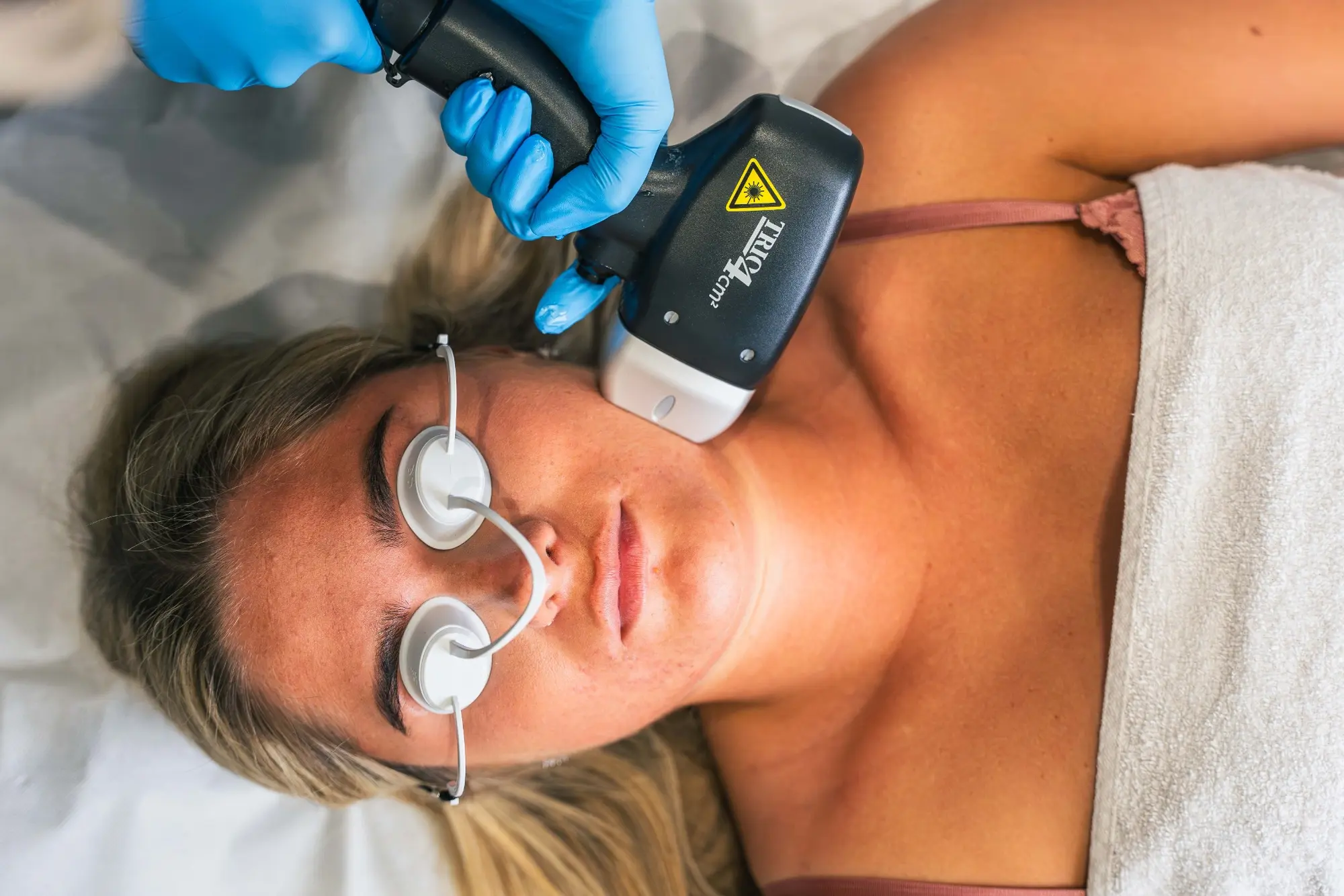
Alma's patient information commonly recommends a series of treatments, and Soprano guidance often cites around 6-10 sessions. At Holmes of Beauty, a typical starting plan for Soprano Titanium is around 6-8 sessions, with the understanding that some clients and areas need more.
Facial or hormonally influenced hair can be more persistent. Dark, coarse hair often gives the laser a clearer pigment target, while white, grey and very blonde hair generally responds poorly to laser regardless of how many sessions are booked.
Why are appointments spaced apart?
Treatments are spaced to match hair-growth biology rather than because the laser needs a long 'recovery'. The correct interval depends on the body area and how quickly new active growth appears. Facial areas are often treated at shorter intervals than slower-growing body areas. Your practitioner should adjust the schedule rather than automatically booking every area on the same calendar.
When should you judge the result?
Look at the trend across the course: slower regrowth, fewer hairs, finer regrowth and areas becoming patchier. Hair may shed over the weeks after treatment, so the day after an appointment is too early to decide whether it worked.
Even after a successful course, some people choose occasional maintenance. Hormonal change can also stimulate new hair growth later. Laser is best described as long-term or permanent hair reduction, not a guarantee that every follicle is gone forever.
Consistency matters more than chasing intensity
Skipping long periods, waxing or plucking between sessions, or repeatedly treating at unsuitable intervals can undermine the logic of a course. Shaving is usually the preferred way to manage hair between appointments because it leaves the follicle target in place.