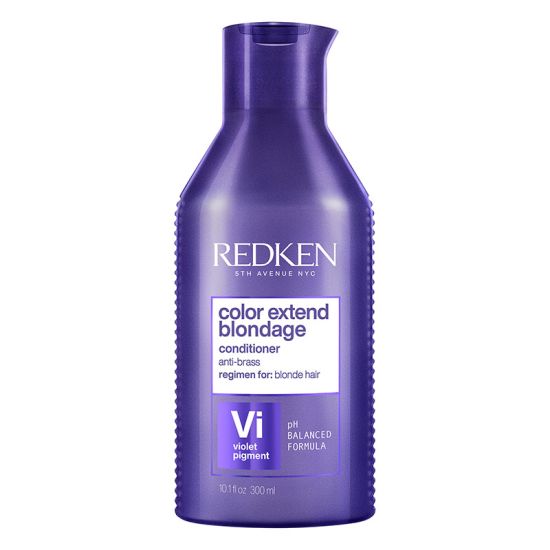
How often should you use purple shampoo? For most people, the answer depends on how quickly yellow brassiness returns, the product directions and the condition of the hair. Purple shampoo can be brilliant when yellow is the problem, but using more of it, more often, or leaving it on for longer is not guaranteed to make blonde hair brighter.
Why purple works on yellow
This is basic colour theory: purple sits opposite yellow, so depositing a small amount of violet pigment can visually neutralise unwanted yellow warmth. Redken Color Extend Blondage uses violet pigment specifically to tone blonde and highlighted hair. That makes it useful when a previously cool blonde is beginning to look yellow between salon appointments.
Yellow and orange are not the same problem
If the unwanted tone is distinctly orange or copper, purple may not be the best correction. Blue sits opposite orange on the colour wheel, while real salon colour correction can involve a more precise mix of tones. If you keep applying purple shampoo and the warmth is barely changing, the issue may be the underlying level of lift rather than a lack of purple pigment.
Purple and blue colour theory
Toning works by placing an opposing colour over unwanted warmth.
Use for yellow brassiness
Purple sits opposite yellow on the colour wheel.
Different warmth, different correction
Purple shampoo will not reliably correct every orange tone.
Watch for dullness or dryness
A toning shampoo is a corrective tool, not automatically an every-wash shampoo.
How often should you use purple shampoo?
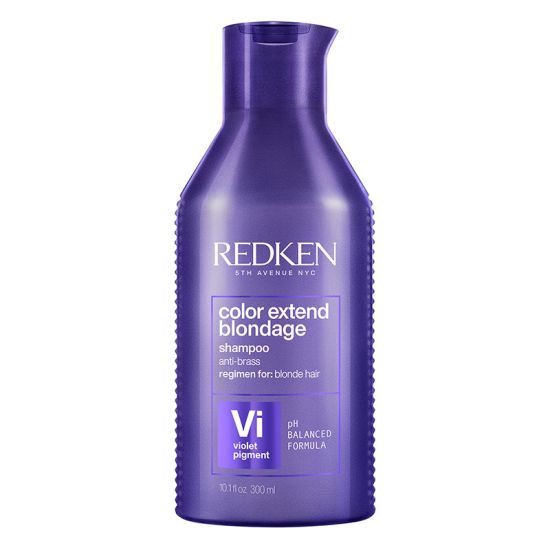
There is no perfect universal schedule. It depends on how often you wash, how porous the hair is, the shade of blonde and the strength of the product. Redken's directions for Blondage advise applying to wet hair and, for maximum toning, leaving the second lather on for 3-5 minutes. That is a useful ceiling for the product instructions – not a reason to leave it on for half an hour.
What happens when you overuse it?
Highly porous blonde hair can grab pigment unevenly, so frequent use may make some areas look dull, smoky, violet or darker while warmer areas remain. Toning shampoo can also be more cleansing than the rich moisturising shampoo your hair may need after bleaching. If every wash becomes a toning wash, you can end up chasing colour while neglecting softness and condition.
Purple shampoo does not lighten hair
This is an important distinction. Purple pigment changes the way existing colour looks; it does not lift natural pigment or make a dark blonde physically lighter. If your blonde is too dark, banded, brassy from insufficient lift or overdue for a professional toner, shampoo will not replace a colour service.
The best blonde routine is usually a rotation
Use a normal shampoo and conditioner that suit the condition of your hair, then bring in purple shampoo when the tone actually needs it. Keep conditioning and heat protection in the routine, because attractive blonde hair is as much about shine and condition as it is about coolness. If you are constantly toning at home, ask your stylist whether your salon formula or maintenance interval needs adjusting.