Yes – for the right kind of congestion
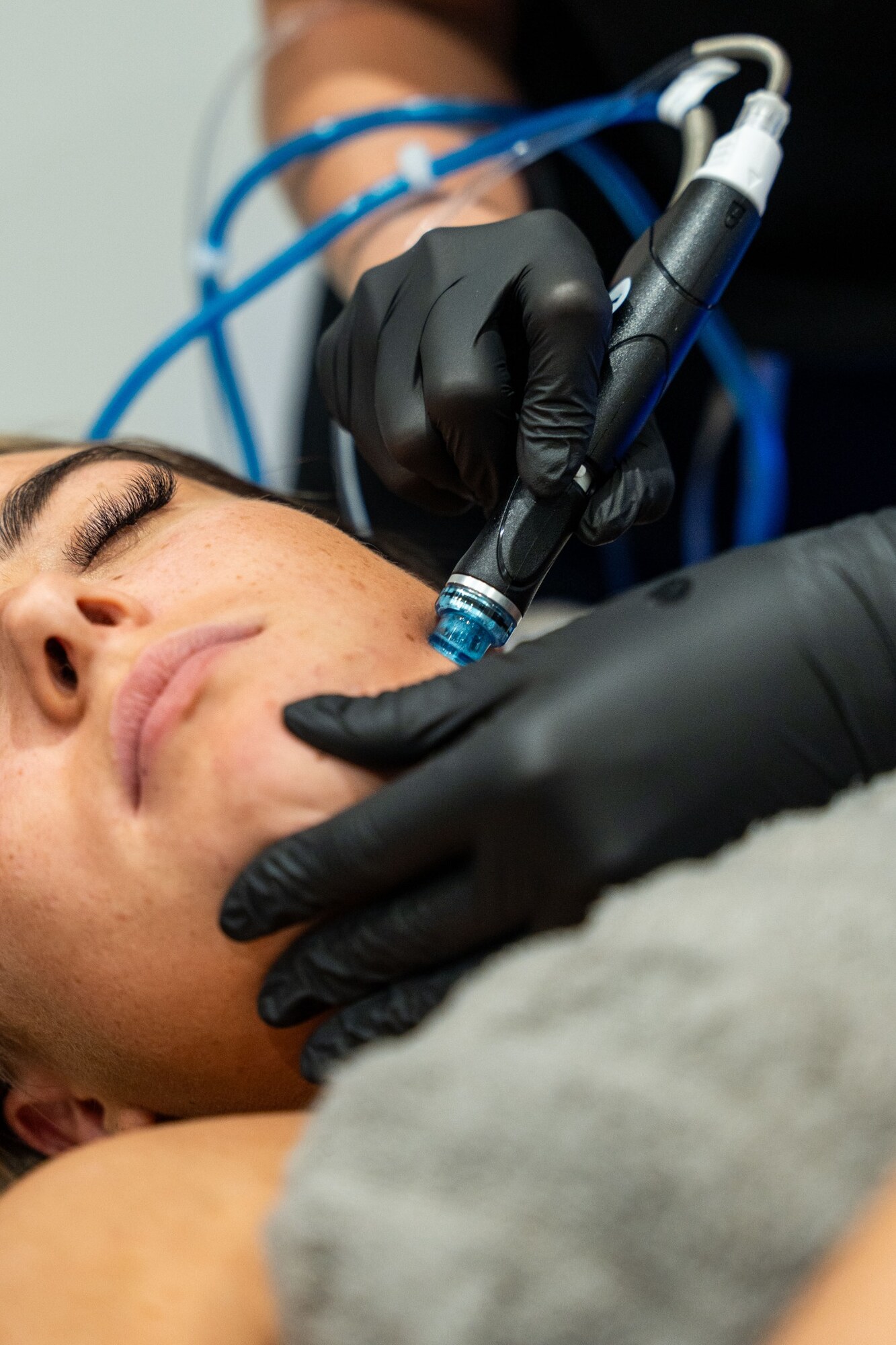
Hydrafacial is particularly well suited to people whose main concern is surface buildup, blackheads, excess oil or pores that look congested. The treatment combines exfoliation with suction-based extraction, so it can remove some of the debris and sebum that make pores look blocked without relying entirely on manual squeezing.
Why pores look 'clogged'
A pore can become congested when oil and dead skin cells accumulate in the follicle. Open comedones are what we call blackheads; closed comedones can look like small skin-coloured bumps. Oiliness, products, hormones and skin-cell turnover can all contribute.
You cannot permanently 'open' or 'close' a pore, but clearing congestion and keeping the skin surface balanced can make pores look cleaner and less obvious.
What can look like a clogged pore?
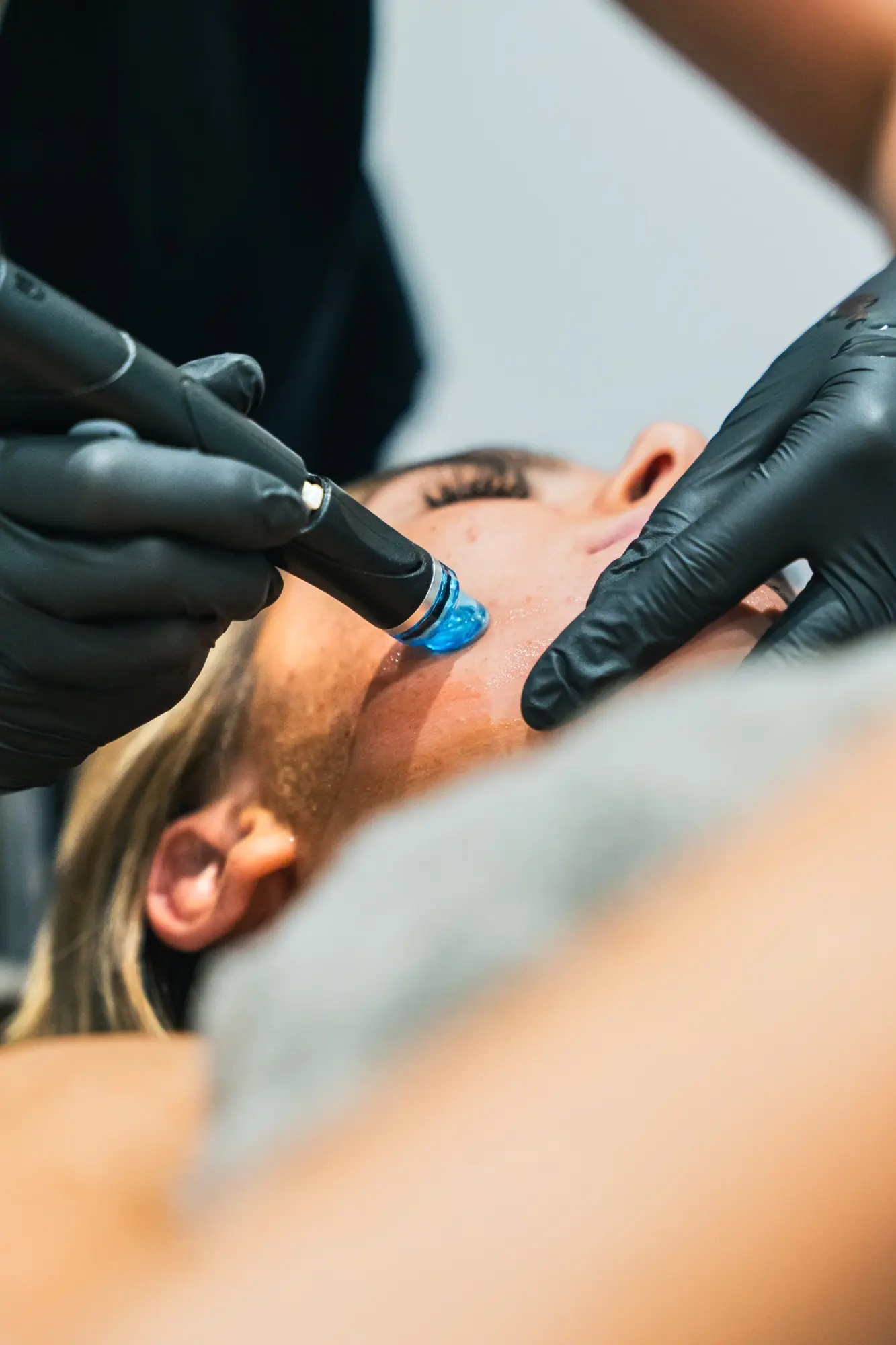
A consultation helps distinguish ordinary oil-filled pores from other bumps.
Open comedone
Oil and keratin are exposed at the surface and darken through oxidation.
Covered bump
A small blockage sits beneath a closed surface.
Not always blocked
A pore can look prominent without containing an extractable plug.
Where Hydrafacial fits
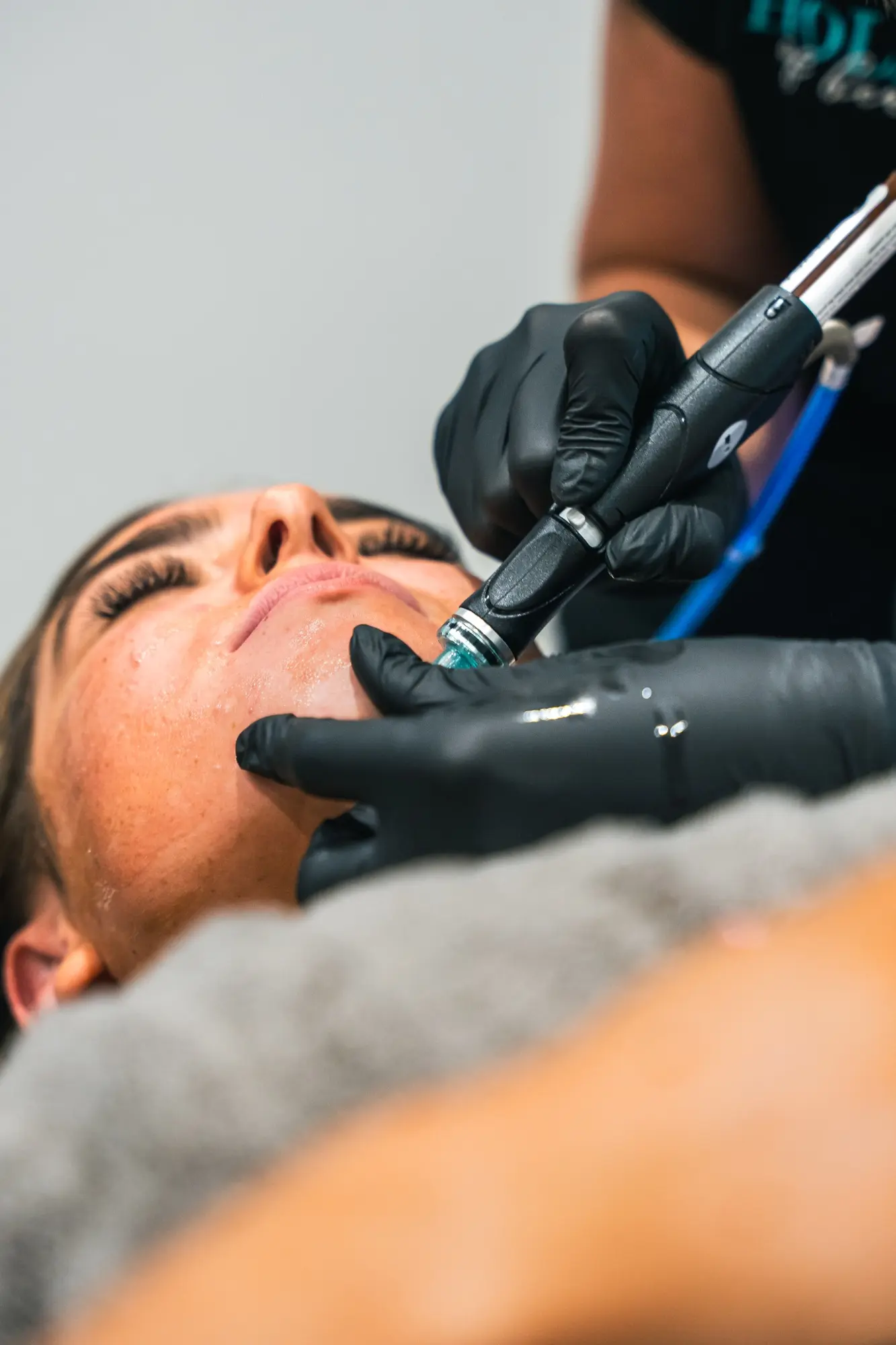
The Hydrafacial process cleanses and exfoliates first, then uses controlled suction during extraction. For clients with oiliness or congestion, treatment can be personalised further. Hydrafacial's current Murad Clarifying booster contains salicylic acid and is positioned for excess oil and congested pores. Blue LED is also used in clarifying protocols.
What does the evidence say about acne?
A small 2022 multicentre study followed 20 adults with mild-to-moderate acne through six Hydrafacial Clarifying Treatments over 12 weeks. Investigator and patient assessments improved by the end of the series and treatments were generally well tolerated.
That is encouraging, but it is not proof that Hydrafacial cures acne. The study was small, open-label and included an employee of The Hydrafacial Company among the authors. Severe, painful, scarring or persistent acne deserves medical assessment rather than relying on salon facials alone.
Could you over-treat congested skin?
Yes. If you are already using strong acids, retinoids or acne medication, piling more exfoliation on top can irritate the skin barrier. A good therapist should ask about your routine and adjust acids, suction and booster choice accordingly. Sometimes the better decision is to calm the skin first.
What should happen at home?
A facial can clear what is there today, but ongoing congestion is influenced by your daily routine. Gentle cleansing, non-comedogenic hydration, suitable active ingredients and consistent SPF may matter more long term than booking increasingly aggressive extractions.